
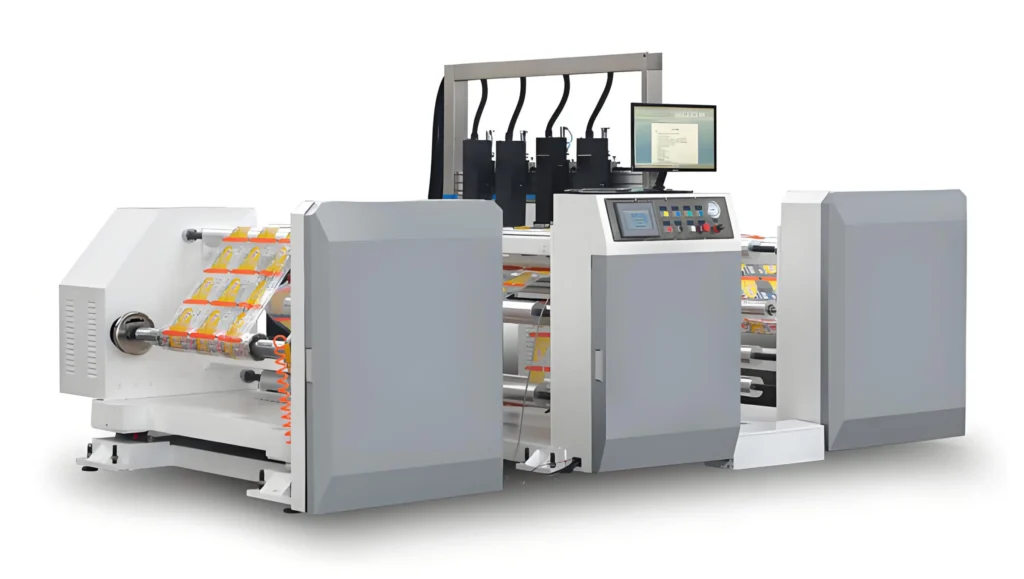
An adhesive label that seems to come off easily but when opened finds the adhesive layer stuck as if it were welded onto the box is a daily scene at e-commerce warehouses, cold chain logistics, and retail stores across the globe. Most people just blame it on ‘too sticky adhesive’ and forget about an even more complex chain: substrate, adhesive type, environment, and aging. Misalign any one link and suddenly removable labels become obstinately attached. What’s worse is end consumers forcefully instigating deformation or damage to the box due to difficulty in peeling it off. The brand gets a negative review—not the label manufacturer—making that small label quietly turn into a ‘black swan’ in supply chain experience.
I. The Underestimated Science of Adhesives: How 1g of Adhesive Determines the 1m² Removal Experience
1. Adhesive Type Options: Permanent, Removable, Low-Temperature, Water-Soluble—Who's "Pretending to Be Permanent"?
The industry roughly categorizes adhesives as permanent or removable, but the truth is that the word “removable” carries a built-in expiration date. Taking acrylic emulsion as an example, peel force can increase by up to 180% within 72 hours. After a week, the crosslinking degree of the adhesive layer soars, causing the originally “gentle” removable adhesive to instantly turn black, becoming “pseudo-permanent.” If the storage temperature rises above 35°C, the adhesive layer will silently undergo a “secondary cure,” rendering the adhesive labels impossible to remove even if the paper is torn.

2. Substrate Wars: PP, PET, and Coated Paper: Which One Is "Making the Difference"?
Many people overlook the stiffness and resilience of the facestock. PET facestock, due to its high dimensional stability, concentrates stress during peeling, causing the entire adhesive layer to be pulled up. Coated paper, on the other hand, has low stiffness and tears easily, leaving paper fibers on the box, creating a visually disastrous “unclean” tear. Even more insidious is the short fibers and large pores of recycled paper, which, when penetrated by the adhesive, form micro-anchors, further complicating the peeling problem.
3. Environmental Variables: From -25°C to +60°C, Adhesives Can be More Volatile Than Humans
EVA hot-melt adhesive, commonly used in cold chain labeling, has a glass transition temperature (Tg) of approximately -20°C. Below this value, the adhesive layer becomes brittle and snaps when the film is removed. In high-temperature warehouses, the adhesive layer softens, causing initial tack to soar and the peel strength curve to rise sharply, leaving adhesive labels “burned” into the plastic boxes like an iron. At humidity levels above 80% RH, some hydrosols reactivate, causing “re-tack,” making adhesive labels even months old suddenly sticky and catching end users off guard.
II. Breakthrough: Making "Easy Tear" a Programmable KPI
1. Microencapsulated Release Technology: Build "Peel Force" into a Timeline
The latest laboratory solution involves implanting 1–3μm urea-formaldehyde microcapsules into the adhesive layer, encapsulating a small amount of ethyl citrate. 24 hours after labeling, the microcapsules slowly rupture, releasing plasticizers. This reduces the adhesive modulus by 30% and the peel force from 12N/50mm to 5N/50mm, ensuring both safe shipping and instant peeling for consumers. This solution has been successfully implemented on turnover boxes from a leading domestic beauty brand, resulting in a 42% reduction in returns due to residual adhesive on the box.
2. Thermodynamic Zoned Adhesive: One Surface, Two Properties
Using a UV curing process, a “thermodynamically responsive grid” is printed on the adhesive surface, creating low-viscosity ridges in high-temperature areas and high-viscosity valleys in low-temperature areas. During storage at room temperature, the high-viscosity areas withstand pressure, preventing warping. When the box is moved to room temperature (20°C), the low-viscosity areas lose adhesion first, forming a “lifted handle” that instantly disintegrates when difficult to peel off. The structural patent has been disclosed by an international adhesive labels giant and is expected to be scaled up in 2026.
3. Digital "Film Tear Index": Let the Supply Chain See Risks in Advance
The algorithm is based on type of adhesive, surface material, temperature and humidity at which it has been stored, and the time it has been transported. They have called this index a “Peel-Risk Score.” Whenever it goes beyond 70, the system throws up an alert to switch the adhesive to low-temperature removable adhesive or apply a 30μm PET release film. This cross-border footwear and apparel seller piloted the solution with reduced after-sales costs due to ‘peel-off complaints’ by 1.2 million yuan per year and attained a positive ROI within just 1.8 logistics cycles.
III. Conclusion Make Adhesive Labels Easier to Tear
The difficulty of peeling adhesive labels isn’t an unsolvable curse; it’s a physics problem that can be solved. From adhesive type chemistry and substrate mechanics to digital twins, each technological innovation is transforming the peel-off experience from abstruse to scientific. Before applying your next label, ask yourself: Does its peel-off force curve guarantee a “gentle ending” for the end user? When the supply chain begins to use the “tear film index” rather than the “weight unit price” to evaluate labels, the last “glue wall” between brands and consumers will truly break.