
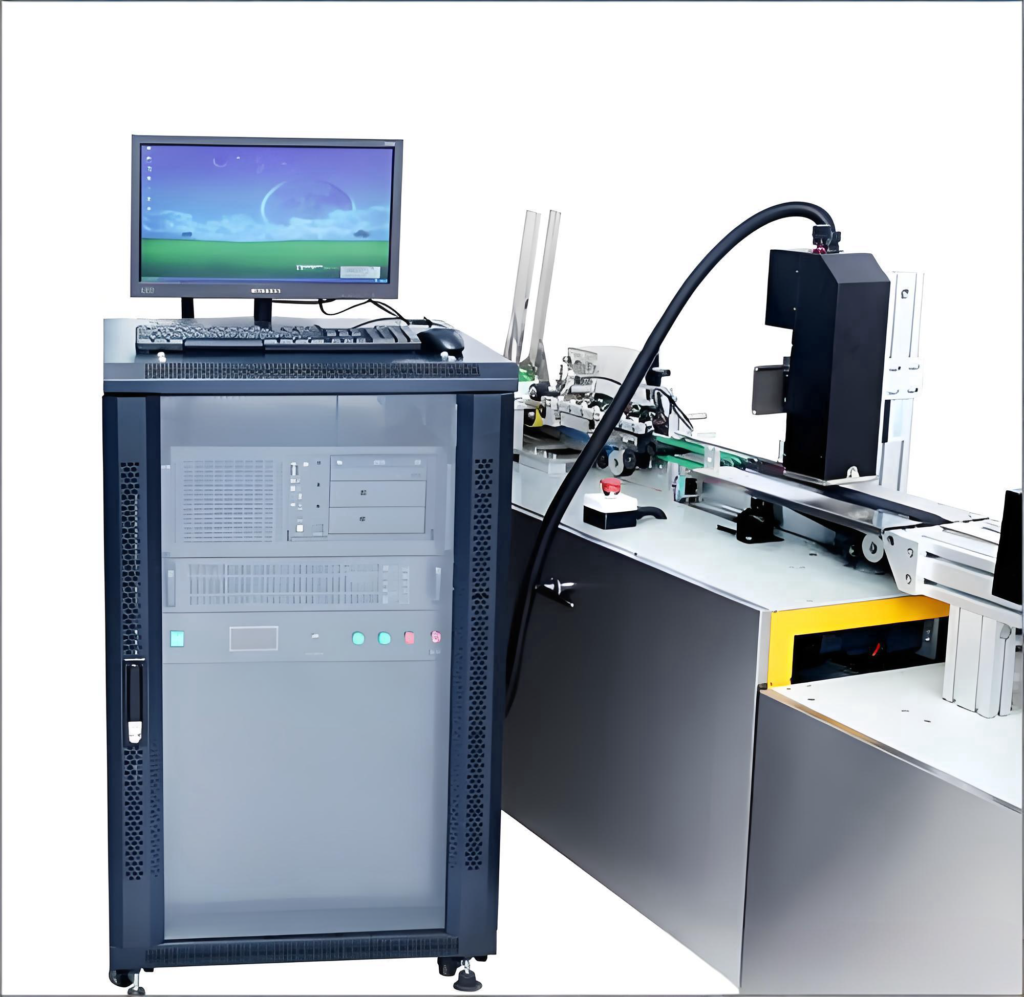
How Does UV Piezoelectric Inkjet Work?
Unlike consumer printers, industrial piezoelectric (Piezo) systems are designed for 24/7 reliability across a vast array of substrates. But what exactly happens inside that compact printhead, and how does UV light turn liquid ink into a rock-solid film in milliseconds? Let’s break down the mechanics, the physics, and the chemistry behind this technology.
1. The Heart of the System: The Piezoelectric Effect
The term “Piezo” refers to the Piezoelectric Effect, a physical phenomenon where certain materials (typically specialized ceramics like Lead Zirconate Titanate, or PZT) change shape when an electric charge is applied.
Because the droplets are generated only when the electric pulse is triggered, this technology is categorized as Drop-on-Demand (DOD). This differs from Continuous Inkjet (CIJ), where ink flows constantly and is deflected by electrodes.
2. The “Drop” Cycle: Pressure and Fluid Dynamics
The formation of a single droplet is a complex aerodynamic event that happens thousands of times per second. The cycle is generally divided into four phases:
- Expansion Phase: The piezo element pulls back, increasing the volume of the ink chamber and drawing ink in from the reservoir.
- Compression Phase: The element pushes inward. The pressure $P$ increases rapidly, pushing the ink toward the nozzle plate.
- Ejection Phase: The ink is forced through the nozzle, forming a liquid column or “tail.”
- Break-off and Recovery: The pulse stops, the piezo returns to its neutral state, and surface tension snaps the tail, creating a clean, spherical droplet flying toward the substrate.
The frequency of these pulses, often measured in Kilohertz (kHz), determines the printing speed. For instance, a printhead operating at fires 30,000 droplets per second from each nozzle.
3. The Chemistry of UV-Curable Inks
The “UV” in UV Piezo Inkjet stands for Ultraviolet. Unlike water-based or solvent-based inks that dry through evaporation, UV inks stay in a liquid state until they are exposed to concentrated UV light.
The Photopolymerization Process
UV inks are composed of monomers, oligomers, pigments, and photoinitiators. When UV light hits the ink, a chemical reaction called photopolymerization occurs:
- The photoinitiators absorb the UV energy and release free radicals.
- These radicals trigger the monomers and oligomers to link together in a cross-linked polymer chain.
- This happens almost instantaneously (often in less than 0.1 seconds), turning the liquid into a solid, durable film.
4. Piezo vs. Thermal Inkjet: Why Piezo Wins for Industry
While Thermal Inkjet (TIJ) is common in home offices, industrial sectors like packaging and sheet material identification almost exclusively use Piezo. Here is why:
| Feature | Piezoelectric Inkjet | Thermal Inkjet |
|---|---|---|
| Durability | Permanent printheads (years of life). | Disposable/short-life heads. |
| Ink Versatility | Compatible with UV, Oil, and Solvent. | Primarily Water/Solvent based. |
| Drop Control | Variable Drop Size (Grayscale). | Fixed Drop Size. |
| Substrates | Non-porous (Plastic, Metal, Glass). | Mostly Porous (Paper, Cardboard). |
5. Critical Components of an Industrial UV System
Beyond the printhead, several subsystems must work in perfect harmony:
A. The Ink Delivery System (IDS)
This system maintains negative pressure. If the pressure is too high, the ink leaks (drools); if too low, air is sucked into the nozzles (de-priming). A stable IDS is vital for consistent printing on high-speed lines.
B. UV-LED Curing Lamps
Modern systems have replaced mercury vapor lamps with UV-LEDs. LEDs are more energy-efficient, produce less heat (protecting thin plastics or delicate hangtags from warping), and have a much longer lifespan.
C. The Printhead Carriage and Z-Axis
In online coding, the distance between the head and the substrate is critical. If the gap is too large, the “satellite” drops (tiny mist-like droplets) will cause blurriness. If the gap is too small, you risk a printhead collision.
6. Strategic Benefits for Industrial Applications
Why are manufacturers switching to UV Piezo for on-line coding and sheet identification?
- Immediate Handling: Because the ink is “cured” (dry) instantly, products can be stacked, cut, or packed immediately without smudging.
- High Adhesion: UV ink creates a strong bond with difficult surfaces, making it ideal for glossy hangtags, plastic cards, and coated cartons.
- Low Maintenance: Since the ink doesn’t dry through evaporation, the nozzles don’t “clog” as easily as solvent-based systems during short pauses in production.
- Variable Data Printing (VDP): Perfect for printing unique QR codes, barcodes, and serial numbers at high speeds.
7. Maintenance and Longevity
Industrial Piezo heads are high-value assets. Maintaining them involves purging (forcing ink through the nozzles to clear air or debris) and wiping with specialized lint-free cloths. Environmental control—keeping the ambient temperature and humidity stable—ensures that the ink viscosity remains within the ideal range for the piezo pulse to work effectively.
Conclusion
UV Piezoelectric Inkjet technology is a masterpiece of fluid dynamics and electrical engineering. By utilizing the precise mechanical deformation of piezo ceramics and the instant chemistry of UV curing, it provides a solution that is both incredibly fast and remarkably versatile. Whether you are labeling thousands of hangtags per hour or marking industrial board materials, understanding the “how” behind the tech is the first step toward optimizing your production ROI.