
Table of Contents
-
Introduction to UV Inkjet Printers
-
Core Design Components of UV Inkjet Printers
-
Key Advantages of UV Inkjet Printers (vs. Traditional Marking Methods)
-
Pain Points Solved by UV Inkjet Printers
-
Common Applications Across Industries
-
Key Considerations for Choosing a UV Inkjet Printer
-
Future Trends of UV Inkjet Printing Technology
-
Conclusion
1. Introduction to UV Inkjet Printers
UV inkjet printers are advanced digital marking and printing systems that use ultraviolet (UV) light to instantly cure specialized inks, delivering high-precision, durable, and efficient results across a wide range of substrates. Unlike traditional inkjet printers that rely on solvent-based or water-based inks requiring extended drying time, UV inkjet technology leverages UV-LED curing to transform liquid ink into a solid state within milliseconds—revolutionizing industrial printing and marking processes. As industries increasingly demand faster production, higher quality, and greater flexibility, UV inkjet printers have become a cornerstone of modern manufacturing, packaging, and advertising, offering unmatched versatility and performance that aligns with the needs of today’s fast-paced production environments.
The global UV inkjet printer market is growing steadily, driven by rising demand for on-demand printing, customization, and compliance with strict environmental and safety standards. From small-batch personalized products to high-volume industrial production, UV inkjet printers cater to diverse needs, making them a valuable investment for businesses looking to enhance efficiency, reduce costs, and improve product quality. This article explores the core design elements, key advantages, pain points solved, and applications of UV inkjet printers, providing a comprehensive guide for businesses seeking to understand and adopt this transformative technology.
2. Core Design Components of UV Inkjet Printers
The performance and reliability of UV inkjet printers are rooted in their thoughtful, precision-engineered design, which integrates advanced components working in harmony to deliver consistent, high-quality results. Below are the key design elements that define modern UV inkjet printers, each playing a critical role in their overall functionality.
2.1 Print Head: The Heart of the System
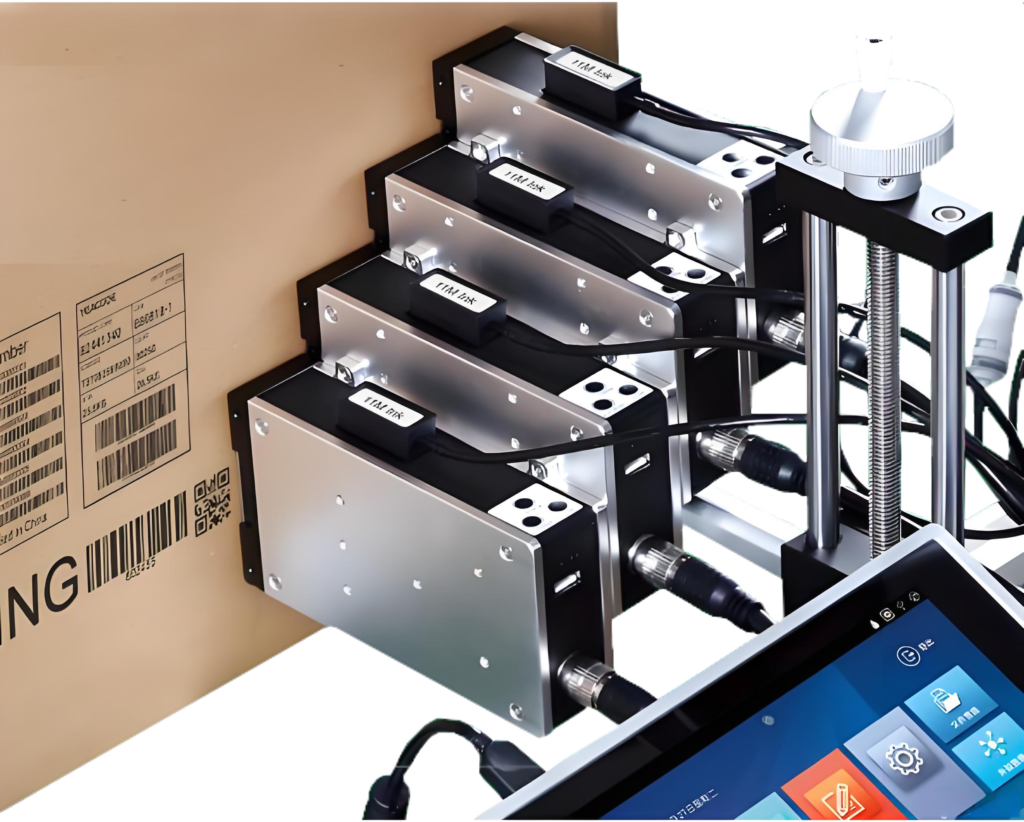
The print head is the most critical component of a UV inkjet printer, responsible for ejecting tiny ink droplets onto the substrate with extreme precision. Most modern UV inkjet printers use piezoelectric (piezo) print heads—such as Ricoh Gen 5/Gen 5i or Epson MICRO PIEZO®—which operate by applying electrical pulses to piezoelectric crystals, causing them to expand and contract, and eject ink droplets of consistent size and shape. These print heads offer exceptional resolution (up to 1440 x 1440 dpi) and droplet control (as small as 5.5pl), ensuring sharp, detailed marks even on small or irregular surfaces. The print head’s design also includes a durable, wear-resistant surface to withstand the abrasive nature of UV inks, with a typical service life of 100 billion actuations per print head, reducing maintenance and replacement costs.
For high-speed applications, UV inkjet printers often feature multi-nozzle print heads or print head bars (in single pass systems) that cover the full width of the substrate, enabling continuous, high-speed printing without sacrificing precision. The print head is also integrated with temperature control systems to maintain consistent ink viscosity, ensuring stable performance even during long production runs.
2.2 UV-LED Curing System
The UV-LED curing system is what sets UV inkjet printers apart from traditional inkjet systems. Unlike conventional drying methods that rely on heat or air flow, UV-LED lights emit specific wavelengths of ultraviolet light that trigger a chemical reaction in the UV ink, curing it instantly upon contact. This design eliminates the need for separate drying stations, reducing production time and preventing ink smudging or bleeding. Modern UV-LED systems are energy-efficient, consuming up to 70% less energy than traditional UV lamps, and have a longer lifespan (up to 50,000 hours), reducing operational costs and environmental impact.
The curing system is strategically positioned directly behind the print head, ensuring that ink is cured immediately after being ejected onto the substrate. This design allows for immediate handling, stacking, or packaging of printed products, significantly boosting production efficiency. Additionally, UV-LED curing systems can be adjusted to different wavelengths to match the specific requirements of different UV ink formulations, ensuring optimal curing results for various substrates and ink types.
2.3 Ink Supply System
The ink supply system of a UV inkjet printer is designed to deliver a consistent, uninterrupted flow of UV ink to the print head, ensuring stable performance and uniform print quality. Key components of the ink supply system include ink tanks, hoses, filters, and a pressure control mechanism. For white ink applications—where titanium dioxide particles are prone to settling—the ink supply system often includes an ink circuit circulation system that continuously circulates ink through the print head, ink tanks, and hoses, keeping particles evenly suspended and preventing clumping or print head clogging.
Pressure control is critical to the ink supply system, with most UV inkjet printers using negative pressure to regulate ink flow, ensuring that ink is delivered to the print head at the optimal pressure for consistent droplet ejection. Positive pressure is also used for nozzle cleaning, keeping the print head free of clogs and ensuring smooth ink jetting. The ink supply system is also equipped with filters to remove impurities and air bubbles, protecting the print head from damage and reducing downtime.
2.4 Substrate Handling System
UV inkjet printers are designed to handle a wide range of substrates, from flat surfaces (such as paper, plastic, and metal) to irregular or three-dimensional objects (such as bottles, containers, and管材). The substrate handling system includes a conveyor belt, adjustable guides, and positioning mechanisms to ensure that the substrate moves smoothly and accurately under the print head. For flexible substrates (such as films or fabrics), the handling system includes tension control to prevent wrinkling or stretching, while for rigid substrates (such as glass or metal), it includes secure clamping to ensure stability during printing.
Advanced UV inkjet printers also feature automatic height adjustment, allowing the print head to maintain the optimal distance from the substrate—critical for ensuring consistent ink droplet placement and adhesion. Some models, such as the Epson SureColor V1080, offer a high gap mode that optimizes print quality for three-dimensional objects, with a maximum print height of 3mm, reducing ink droplet deviation by approximately 30%.
2.5 Control System and Software
The control system is the brain of the UV inkjet printer, integrating hardware and software to manage all aspects of the printing process. Modern UV inkjet printers feature user-friendly touchscreen interfaces that allow operators to adjust settings (such as print speed, resolution, and ink density) with ease, reducing the learning curve and minimizing human error. The software component includes RIP (Raster Image Processor) software, which converts digital files into print-ready commands, ensuring accurate color reproduction and image quality.
Many UV inkjet printers also support cloud-based solutions, allowing operators to monitor printer performance, manage print jobs, and access software updates remotely. For variable data printing (VDP), the software enables quick switching between different content (such as batch numbers, serial numbers, or logos) without the need for plate making, supporting on-demand printing and small-batch customization.
3. Key Advantages of UV Inkjet Printers (vs. Traditional Marking Methods)
UV inkjet printers offer a range of advantages over traditional marking methods such as screen printing, pad printing, and thermal transfer, making them the preferred choice for modern industrial applications. These advantages are rooted in their advanced design and technology, delivering greater efficiency, flexibility, and quality.
3.1 Instant Curing and High Efficiency
One of the most significant advantages of UV inkjet printers is their instant UV-LED curing, which eliminates drying time and allows for immediate handling of printed products. Unlike traditional methods that require hours of drying (for solvent-based inks) or heating (for thermal transfer), UV inkjet printers cure ink in milliseconds, reducing production time by up to 80%. This is particularly critical for high-volume production lines, where downtime can be costly. For example, in the packaging industry, UV inkjet printers can keep up with the speed of automated production lines, printing up to 300 m/min while maintaining high quality.
3.2 High Precision and Consistent Quality
UV inkjet printers deliver exceptional print quality with high resolution (up to 1440 x 1440 dpi) and consistent ink droplet placement, ensuring sharp, clear marks and vibrant colors. The piezoelectric print head technology allows for precise control of ink droplet size (as small as 5.5pl), resulting in smooth, detailed images and text—even on small or irregular surfaces. Unlike screen printing, which can produce uneven ink layers or smudges, UV inkjet printers deliver uniform coverage with no streaks or inconsistencies, ensuring that every product meets the same high-quality standard.
3.3 Versatility Across Substrates
UV inkjet printers are highly versatile, capable of printing on almost any substrate—including non-porous materials such as plastic, glass, metal, and ceramic, as well as porous materials such as paper, cardboard, and wood. This versatility eliminates the need for multiple machines for different substrates, reducing equipment costs and simplifying production processes. Specialized UV inks are available for different substrates, ensuring strong adhesion and durability. For example, UV inks designed for plastic substrates offer excellent resistance to abrasion and chemicals, while those designed for glass offer strong adhesion without damaging the surface.
3.4 Flexibility and Customization
UV inkjet printers support on-demand printing and variable data printing (VDP), allowing businesses to print unique content on each product without the need for plate making. This is ideal for small-batch customization, limited-edition products, or personalized packaging, where traditional methods are inefficient and costly. For example, in the cosmetic industry, UV inkjet printers can print unique serial numbers or personalized messages on each product, enhancing brand engagement and customer loyalty. The ability to quickly switch between different content and formats also makes UV inkjet printers ideal for businesses with diverse product lines.
3.5 Environmental Friendliness and Safety
UV inkjet printers are more environmentally friendly than traditional marking methods, as UV inks contain no volatile organic compounds (VOCs) and produce minimal waste. Unlike solvent-based inks, which release harmful fumes into the environment, UV inks are non-toxic and odorless, making them safe for use in food packaging and other sensitive applications. Additionally, UV-LED curing systems consume less energy than traditional UV lamps, reducing carbon emissions and operational costs. Many UV inks also meet international environmental standards, such as FDA approval for food contact, ensuring compliance with strict regulations.
3.6 Cost-Effectiveness in the Long Run
While the initial investment in a UV inkjet printer may be higher than traditional methods, the long-term cost savings are significant. UV inkjet printers eliminate the need for plate making, stencils, or masks, reducing setup costs and waste. The instant curing technology reduces production time, increasing productivity and reducing labor costs. Additionally, UV inks have a longer shelf life than solvent-based inks, and the print head has a long service life, reducing maintenance and replacement costs. For businesses with high-volume production or diverse needs, the cost savings from reduced waste, increased efficiency, and lower maintenance make UV inkjet printers a cost-effective investment.
4. Pain Points Solved by UV Inkjet Printers
Traditional marking methods have long been plagued by a range of pain points that hinder efficiency, quality, and flexibility. UV inkjet printers address these pain points head-on, providing practical solutions that improve production processes and reduce costs.
4.1 Slow Drying Time and Smudging
One of the biggest pain points of traditional solvent-based or water-based inkjet printers is slow drying time, which leads to smudging, bleeding, and the need for separate drying stations. This not only increases production time but also results in wasted products due to smudged marks. UV inkjet printers solve this problem with instant UV-LED curing, ensuring that ink is cured immediately after printing, eliminating smudging and allowing for immediate handling and packaging. This reduces waste and increases production efficiency, particularly in high-volume applications.
4.2 Poor Adhesion on Non-Porous Substrates
Traditional marking methods often struggle with poor adhesion on non-porous substrates such as plastic, glass, and metal, leading to marks that fade, peel, or scratch off over time. This is a critical issue for products that undergo harsh handling, storage, or outdoor exposure. UV inkjet printers solve this problem with specialized UV inks that form a strong bond with non-porous substrates, ensuring durability and resistance to abrasion, water, and UV light. Additionally, some UV inkjet printers feature pre-treatment systems that enhance adhesion on difficult substrates, further improving durability.
4.3 High Setup Costs and Inflexibility
Traditional methods such as screen printing and pad printing require expensive plate making or stencil creation, which is time-consuming and costly—especially for small-batch production or frequent content changes. This inflexibility makes it difficult for businesses to adapt to changing customer needs or market demands. UV inkjet printers eliminate the need for plate making, allowing for on-demand printing and quick content switching. This reduces setup time and costs, making it feasible to produce small batches or customized products without sacrificing efficiency.
4.4 Ink Settling and Print Head Clogging
For white ink or specialty inks containing heavy pigments (such as titanium dioxide), traditional ink supply systems often suffer from ink settling, which causes clumping and print head clogging. This leads to downtime, increased maintenance costs, and poor print quality. UV inkjet printers solve this problem with ink circuit circulation systems that continuously circulate ink, keeping pigments evenly suspended and preventing clumping. The circulation system also filters out impurities and air bubbles, protecting the print head and ensuring stable performance.
4.5 Environmental and Safety Concerns
Traditional solvent-based inks release harmful VOCs, which are not only damaging to the environment but also pose health risks to operators. Additionally, many traditional inks do not meet strict environmental or safety standards, making them unsuitable for food packaging or medical applications. UV inkjet printers use non-toxic, VOC-free UV inks that are safe for operators and the environment, meeting international standards such as FDA approval. Some models also feature built-in air filtration systems to reduce odors, making them suitable for use in closed environments.
5. Common Applications Across Industries
UV inkjet printers are used across a wide range of industries, thanks to their versatility, efficiency, and high quality. Below are some of the most common applications, highlighting how UV inkjet printers meet the unique needs of each industry.
5.1 Packaging Industry
The packaging industry is one of the largest users of UV inkjet printers, with applications including product labels, packaging boxes, bottles, and containers. UV inkjet printers are ideal for packaging because they can print on a wide range of materials (such as plastic, glass, and cardboard), deliver high-quality, durable marks, and support variable data printing (such as batch numbers, expiration dates, and barcodes). In the food and beverage industry, UV inkjet printers use food-grade inks that meet FDA standards, ensuring safety and compliance. In the cosmetic industry, they print vibrant, detailed logos and product information on bottles and containers, enhancing brand appeal.
5.2 Advertising and Signage
UV inkjet printers are widely used in the advertising and signage industry for printing banners, posters, billboards, and indoor signs. Their ability to print on a variety of substrates (such as vinyl, acrylic, and metal) and deliver vibrant, UV-resistant colors makes them ideal for outdoor signage, which must withstand harsh weather conditions. UV inkjet printers also support large-format printing, allowing for the creation of eye-catching, high-resolution signs and displays. Additionally, the instant curing technology allows for quick turnaround times, making them suitable for time-sensitive advertising campaigns.
5.3 Industrial Manufacturing
In industrial manufacturing, UV inkjet printers are used for marking components, parts, and equipment with serial numbers, barcodes, and product information. They are capable of printing on metal, plastic, and ceramic substrates, ensuring durable marks that withstand harsh industrial environments (such as high temperatures, chemicals, and abrasion). UV inkjet printers also support high-speed printing, making them suitable for integration into automated production lines.