

Asking about the price of the best printer is a bit like asking how much the best car costs. It depends. Best for whom? Best for what purpose? The answer shifts dramatically based on who’s asking and what they need the machine to do.
A college student printing essays has wildly different requirements than a graphic designer proofing color work. A warehouse manager printing shipping labels operates in an entirely different universe than a photographer producing gallery prints. Yet all of them want the “best” option for their situation.
So let’s untangle this.
Why "Best" Means Different Things
The word gets thrown around loosely in printer marketing. Every manufacturer claims something is best—best in class, best value, best for small business. These claims overlap, contradict each other, and often confuse more than they clarify.
What actually defines the best printer for any given buyer usually comes down to a handful of factors:
- Print quality requirements
- Monthly volume expectations
- Speed needs
- Material compatibility
- Total cost of ownership
- Physical space constraints
- Connectivity requirements
Someone prioritizing photo quality will land on a completely different machine than someone focused on speed and volume. Both might genuinely own the best printer for their circumstances—at vastly different price points.
Price Ranges by Category
Rather than chasing a single “best” price, it makes more sense to understand what different budgets actually buy. Here’s a realistic breakdown across major categories.
| Printer Type | Price Range | Strengths | القيود |
|---|---|---|---|
| Budget inkjet | $50-$150 | Low entry cost, photo capable | High ink costs, slower speeds |
| Mid-range inkjet | $150-$400 | Versatile, good quality | Moderate running costs |
| Ink tank printers | $200-$600 | Ultra-low cost per page | Higher upfront investment |
| Entry-level laser | $150-$350 | Fast text, low running cost | Limited color quality |
| Color laser | $300-$1,200 | Speed, reliability, sharp text | Weaker photo reproduction |
| Wide-format | $500-$2,500 | Large prints, specialty media | Space, specialized use |
| Photo-specialty | $800-$3,000+ | Exceptional color accuracy | Narrow use case |
| Production/commercial | $3,000-$10,000+ | Volume, durability, features | Overkill for most users |
That’s a massive spread. And honestly, some of the most satisfying printer purchases happen in the $200-$500 range where technology has gotten remarkably good without demanding premium prices.
The Budget Sweet Spot
There’s an interesting reality about printer pricing that doesn’t get discussed enough. The best printer for most people—genuinely most—costs somewhere between $250 and $500. That range has become surprisingly competitive.
Ink tank printers from brands like Epson and Canon have reshaped expectations here. Machines like the EcoTank series deliver thousands of pages from included ink bottles, drastically cutting ongoing costs. The upfront price looks higher than bargain inkjets, but total ownership cost drops significantly.
For laser users, Brother and HP offer solid options under $400 that handle typical office workloads without complaint. Fast text printing. Reliable paper handling. Reasonable toner costs. Nothing glamorous, just dependable performance month after month.
What You Get Under $300
Surprisingly capable machines exist at this price. Expect:
- Decent print speeds (around 15-20 ppm for laser, 10-15 for inkjet)
- Wireless and mobile printing support
- Automatic duplexing on most models
- Acceptable output quality for documents and basic graphics
- Compact designs suitable for home offices
The best printer at this tier won’t wow anyone with blazing speed or museum-quality color. But for everyday printing—reports, school assignments, invoices, the occasional photo—these machines handle things just fine. More than fine, really.
What $500-$1,000 Buys
Step into this range and options expand noticeably. Higher-end inkjets start producing genuinely impressive color. Laser printers get faster and more robust. Paper handling improves with larger trays and more input options.
Features commonly found here include:
- Touchscreen controls
- Advanced scanning and copying capabilities
- Higher duty cycle ratings
- Better build quality and longer lifespan
- More sophisticated security features
For small businesses printing regularly, this category often represents the real sweet spot. The machines feel professional. They keep up with moderate demands. And they don’t break the budget.
When Spending More Actually Makes Sense
Premium pricing—$1,000 and beyond—serves specific needs rather than general ones. The best printer at these prices excels in narrow categories where performance demands justify the investment.
Professional photography printing, for instance. Machines from Canon’s imagePROGRAF line or Epson’s SureColor series produce stunning output on specialty papers. Color accuracy, tonal range, archival quality—all dramatically superior to consumer-grade equipment. But spending $1,500 on a photo printer only makes sense for people who actually need that capability.
Similarly, high-volume office printers command premium prices because they’re engineered for different workloads entirely. Printing 20,000 pages monthly requires fundamentally different hardware than printing 500. The engineering shows in the price tag.
For businesses that need vibrant, high-impact output across a range of materials—signage, packaging, promotional items—a رقمي بالألوان الكاملة printing solution opens up possibilities that standard office printers simply can’t deliver. These systems handle diverse substrates with rich, accurate color reproduction, making them the best printer choice for commercial and creative production work where output quality directly affects revenue.
Specialty Printing: Beyond the Office
Sometimes the search for the best printer leads away from traditional office equipment entirely. Certain industries and applications demand printing technologies that consumer and business machines were never designed to handle.
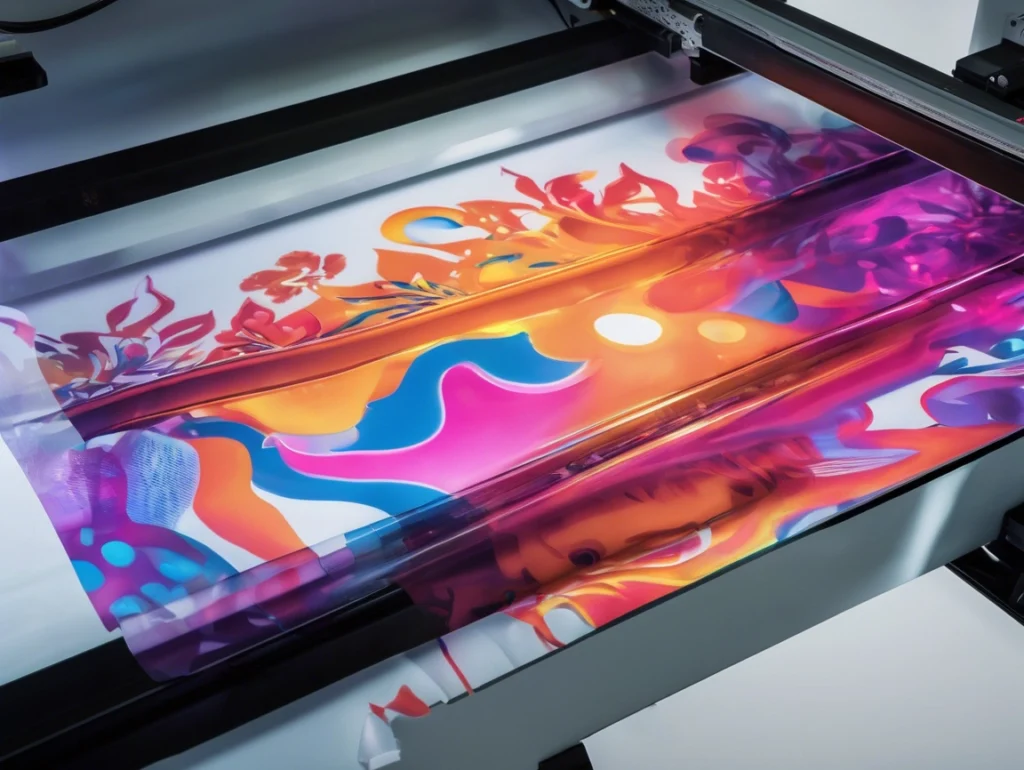
Label production, custom stickers, decorative films, flexible packaging—these applications require continuous printing on roll-based materials with precision and durability that standard printers can’t match. A Roll Film UV Printing system, for example, uses UV-curable inks to print directly onto roll film substrates, producing vibrant graphics that cure instantly and resist scratching, fading, and moisture. For businesses in packaging, labeling, or custom decal production, this kind of specialized equipment genuinely qualifies as the best printer money can buy—even though it looks nothing like what most people picture when they hear the word “printer.”
The key takeaway? Don’t limit the search to conventional categories if conventional categories don’t fit the actual need.
The Cost-Per-Page Reality
Purchase price misleads when considered alone. A cheap best printer candidate at $79 might cost three times more to operate annually than a $300 alternative. Ink and toner expenses add up relentlessly.
Some rough cost-per-page comparisons worth noting:
- Budget inkjet cartridges: 8-15 cents per color page
- Ink tank systems: 1-3 cents per color page
- Color laser toner: 12-18 cents per color page (standard yield)
- Color laser toner: 8-12 cents per color page (high yield)
- Black-and-white laser: 1-4 cents per page
These numbers vary by model and usage patterns, but the general relationships hold. Ink tank technology has genuinely disrupted the traditional model where cheap printers subsidized expensive consumables.
For anyone printing more than a few hundred pages monthly, calculating projected annual costs reveals the true picture. Sometimes the best printer is simply the one that costs least to feed over time.
Brand Reputation vs. Actual Performance
Brand loyalty runs strong in printing. Some people swear by HP. Others won’t touch anything besides Brother. Canon and Epson each have devoted followings. Xerox dominates certain professional categories.
But brand preference doesn’t always align with current product reality. Each manufacturer has stronger and weaker product lines. HP makes excellent laser printers but some of their inkjet strategies feel frustrating—subscription ink services, firmware that blocks third-party cartridges, that sort of thing.
Brother consistently delivers value without drama. Their machines rarely top “best of” lists for excitement, but they show up, work reliably, and don’t nickel-and-dime users on supplies. There’s something to be said for that approach.
Epson and Canon have pushed ink tank technology forward aggressively. For color-heavy users printing photos or graphics, these brands often deliver the best printer experience in consumer categories.
Common Mistakes When Shopping
Buyers frequently stumble in predictable ways. Awareness helps avoid expensive regret.
- Chasing the lowest purchase price.That $59 printer costs far more than it appears once ink costs surface.
- Overbuying features.Fax capability, massive paper trays, enterprise security—unnecessary for home use.
- Ignoring physical dimensions.Some printers are surprisingly large. Measure the intended space first.
- Forgetting about noise.Laser printers particularly can be loud during operation. Open office layouts suffer.
- Assuming all-in-one means all-in-best.Multifunction devices compromise somewhere. Dedicated machines often outperform in specific tasks.
The best printer purchase usually involves restraint. Buying exactly what’s needed—nothing more, nothing less—tends to produce the happiest outcomes.
Practical Recommendations by Use Case
Rather than declaring one universal winner, here’s a more useful framework:
- Home with light use:Ink tank inkjet, $200-$300 range
- Home office with regular printing:Color laser or ink tank, $300-$500
- Small business team:Workgroup laser, $500-$1,000
- Creative professional:Specialty inkjet or wide-format, $800-$2,500
- High-volume operation:Production-grade laser, $2,000+
Each scenario defines its own best printer at its own price point. Trying to compare across categories creates confusion rather than clarity.
Final Thoughts
The price of the best printer ranges from under $300 for most personal users to several thousand for specialized professional needs. There’s no single answer because there’s no single “best.”
What matters more than any review score or brand name is alignment between the machine’s capabilities and the buyer’s actual requirements. A perfectly matched $250 printer outperforms a poorly matched $1,000 one every time—at least from the perspective of the person using it daily.
Take time to assess real needs. Calculate ongoing costs. Read user reviews from people with similar usage patterns. The best printer is out there at a reasonable price. It just takes honest self-assessment to find it.